Belonging, Connection And Collective Power At The FCEM World Congress
Celebrating Belonging, Connection and Collective Power
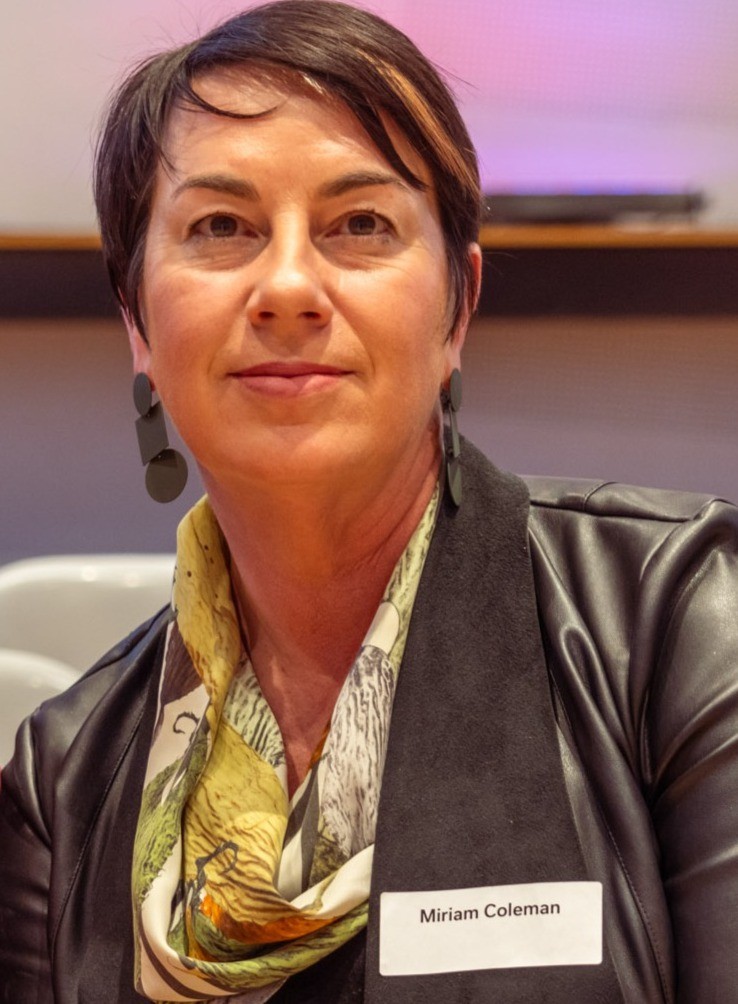
By Miriam Coleman, President – Tasmania State Division
There are moments in life when you know, almost immediately, that you are exactly where
you are meant to be. I certainly didn’t expect it to be in Athens, where I found myself in a
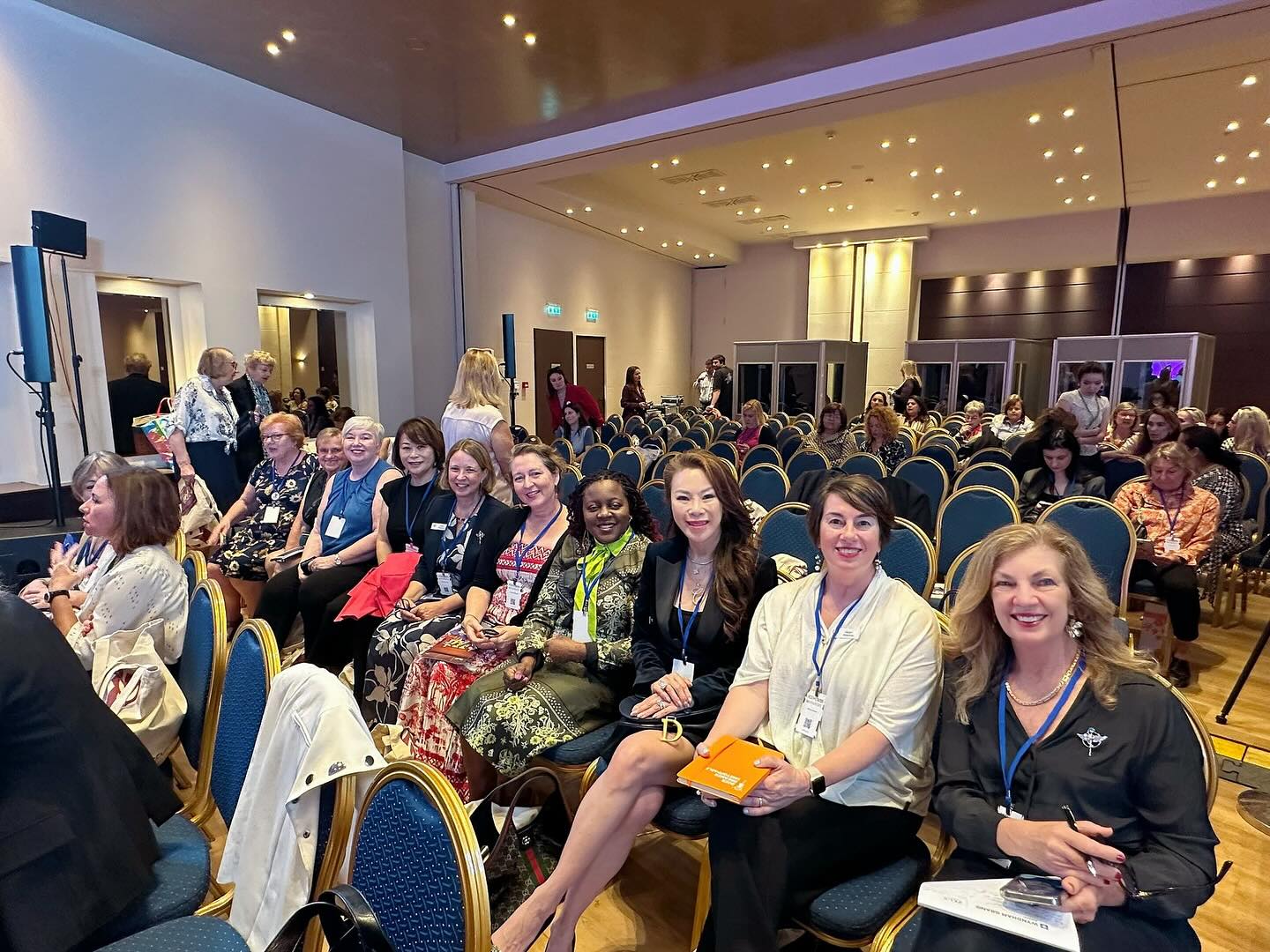
room with more than 500 women entrepreneurs from across the globe, attending the 72nd
FCEM World Congress. What unfolded over those days was not simply a conference. It was
an experience of belonging, perspective and collective resolve that will stay with me for a
very long time. I had found myself exactly where I was meant to be.
I arrived carrying a bright orange notebook gifted to me by the extraordinary Amanda Jones,
a WCEI Tas member and an entrepreneur of great talent. I chose it because it was
impossible to lose in the depths of my handbag, but also because it felt symbolic. This
mattered. I knew the days ahead were going to be incredible and I wanted to capture what I
was seeing, hearing and feeling, knowing I would want to return to it later and reflect.
FCEM, or Femmes Chefs D’Entreprises Mondiales, was founded in 1945, at the end of the
Second World War, by Yvonne Foinant. Eighty years on, it connects women in business
across more than 120 countries and five continents. To be part of that lineage, even briefly,
is both humbling and empowering.
One line from the opening session landed with particular force.
“You are the daughter of the pioneers, and you are the leader of the next chapter.”
Sitting there, surrounded by women who had travelled from every corner of the world, I felt
the truth of that statement settle deeply within me. We stand because others stood before
us. And equally, we carry responsibility for those who will follow.
Throughout the Congress, I found myself torn between taking notes and simply being
present. The speakers were extraordinary. The conversations were rich and layered. I am
someone who loves data and evidence, yet even I found moments where the statistics
mattered less than the shared understanding in the room.
That said, some of the data presented was impossible to ignore. One in ten start-ups
globally is founded by a woman. That number is improving, but context matters. Only 2.35
per cent of the entire global venture capital is allocated to women-founded businesses. At
the same time, 62 per cent of women in business are using personal savings to fund their
enterprises. That level of personal risk is sobering.
There was also hope. Forty-five per cent of women-led businesses are now led by women
under the age of 35. A new generation is stepping forward, building on the groundwork laid
before them.
Our global FCEM President, Marie Christine Oghly, posed a question that drew collective
laughter and recognition.
“What would the business world be without women? It would be a disaster.”
It was humorous, but it was also precise. Women are not a sidebar to the economy. We are
central to it.
Reflecting on FCEM’s 80-year history, we were asked three powerful questions. Who have
we become? What is our contribution? How far do we want to go? From these, a clear
redefinition emerged. Women entrepreneurs are agents of change. We are an influential
economic force. And we are a source of inspiration for future generations.
One of the most encouraging moments of the Congress was the focus on moving from
conversation to action in motion. FCEM has entered into a partnership with the United
Nations International Development Organization. UNIDO is aimed at breaking down
structural barriers faced by women-led businesses. The first initiative is the creation of a
global white book documenting women-led organisations working in digital innovation,
sustainability and the circular economy.
When I later explored global data, I was struck by the absence of information on women-led
businesses in Australia. No data. No visibility. That, in itself, reinforces why this work
matters.
Another theme that resonated strongly was captured in a line that stayed with me long after
the session ended:
“We are done asking permission. We take our seats at the table because we belong there.”
Again and again, the message was clear. Enough talking. It is time for collective action.
Change happens when women in business, politics and community leadership move
together. It starts locally and influences globally. Our local networks matter more than we
sometimes realise, they are quite powerful.
One study on women in STEM stayed with me. Despite increasing participation, many
women leave after graduation. The reasons were not capability or ambition. They were the
absence of female role models, female mentors and female networks. This applies far
beyond STEM. Visibility and connection are not optional. They are essential.
I hold a strong belief about women in leadership. We have strong backs. We carry
responsibility, pressure and expectation. But we also have soft fronts, our vulnerability and
our caring compassion for humanity. FCEM creates safe spaces, locally and globally, where
both are welcome. Where strength is not diminished by honesty, but deepened by it.
Belonging was the quiet thread running through everything. Belonging locally. Belonging
globally. Knowing that no woman needs to stand alone.
If you are ever considering attending a World Congress, my answer is simple. Come. Not
only for the insights and the speakers, but for the connections. I saw this most clearly on a
post-Congress tour, when one woman chose to travel alone, with strangers, rather than
follow familiar paths. By the end, she had friends across continents. That is the real power of
this network.
We have the capacity and the capability to influence great change. But only if we ensure that
no woman stands alone.
That is my promise.
You can also watch the full video of this reflection here.